Securing professional pest control service in Prescott protects residential structures from wood-destroying insects and indigenous venomous wildlife. Ravelo Pest Elimination delivers targeted biological barrier treatments designed specifically for the unique granite and chaparral terrain of Yavapai County.
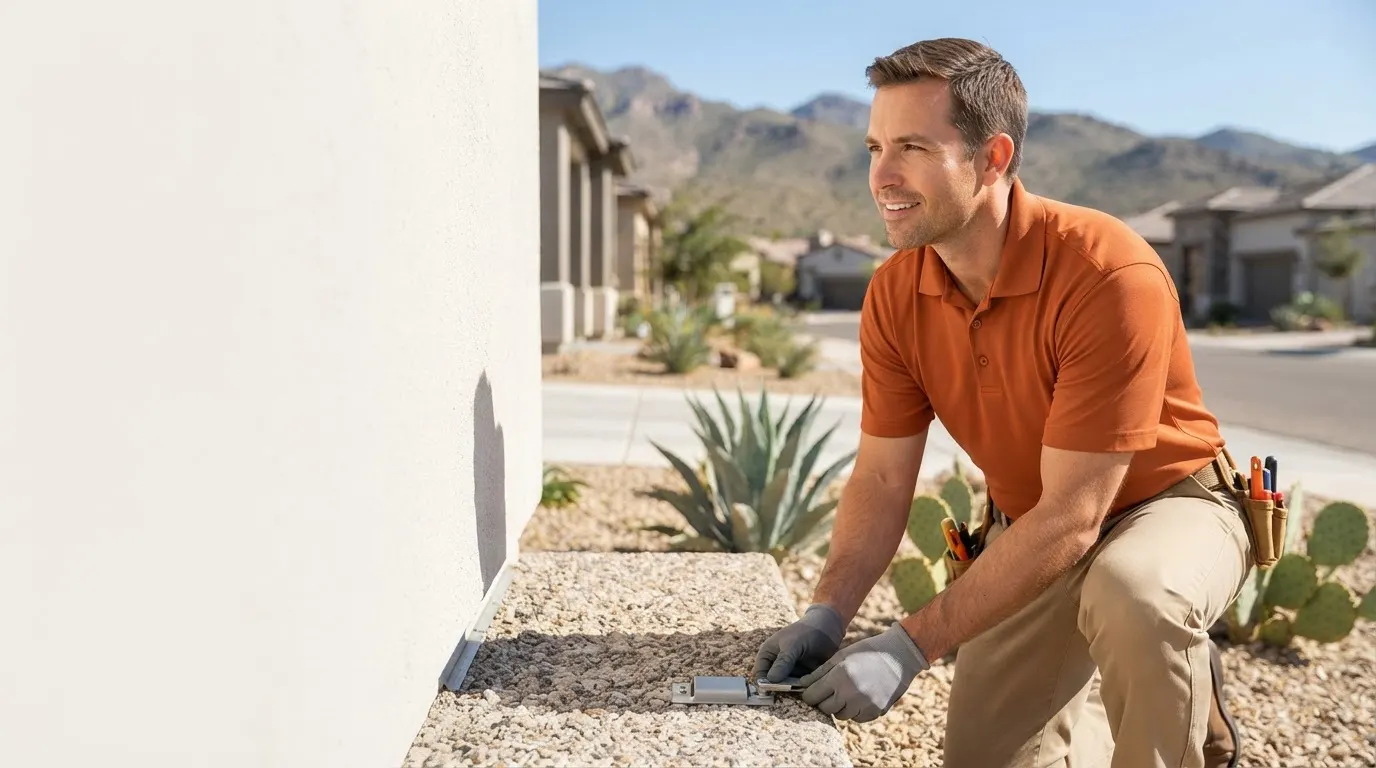
A pest control service in Prescott is a specialized environmental management service that inspects, identifies, and neutralizes structural, wood-destroying, and venomous pests adapted to high-elevation Central Arizona ecosystems.
Every service reflects the same meticulous attention to detail, whether it's a single job or a larger pest control sevice project across Prescott.
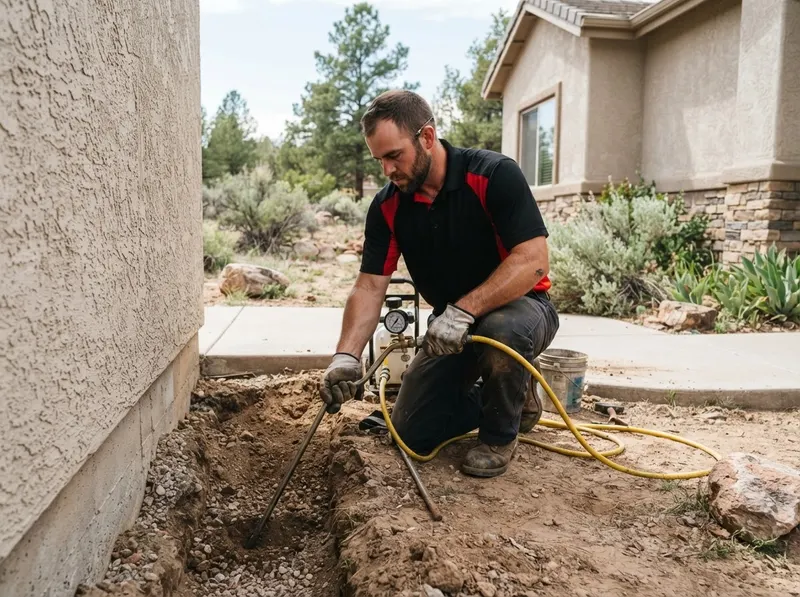
Liquid soil treatments, stem-wall drilling, and deep-trench barrier injections using non-repellent termiticides designed to neutralize desert subterranean termite colonies. Technicians trench continuous 6-inch by 6-inch channels through coarse decomposed granite soils surrounding stem walls and inject non-repellent termiticide at a standard application volume of 4 gallons per 10 linear feet. For structures built over post-tension or floating monolithic slabs, precision horizontal sub-slab rod injection targets expansion joints, plumbing chases, and electrical conduit penetrations where mud tubes emerge. The applied termiticide binds directly to mineral soil particles, remaining undetectable to worker termites who track the active ingredient into deep subterranean central galleries to achieve complete colony cessation without outdoor structural disruption.
Get a quote →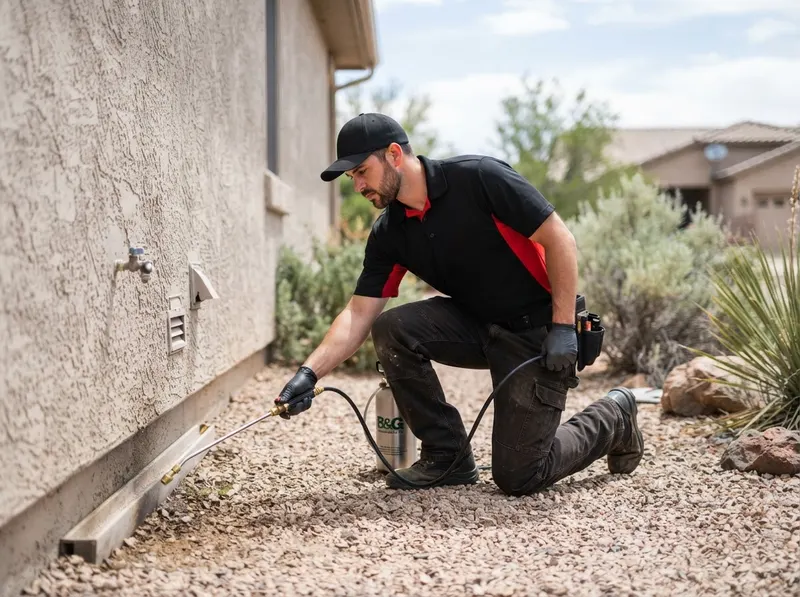
Application of UV-stable microencapsulated synthetic pyrethroids across exterior foundations, rock retaining walls, and weep screeds to neutralize Centruroides sculpturatus. High-elevation solar radiation at 5,347 feet degrades standard emulsion sprays within days, but polymer-encapsulated formulations shield active molecules against direct ultraviolet rays and sudden surface rain wash. Technicians lay a continuous 3-foot vertical and 10-foot horizontal exterior barrier band, treating foundation stem walls, dry-stacked granite garden barriers, and the lower perimeter of decorative stucco weep screeds. Mechanical treatment incorporates caulking structural expansion joints, installing copper mesh inside exterior weep holes, and adjusting weatherstripping on all outward-facing doors, halting scorpion transit into interior living spaces.
Get a quote →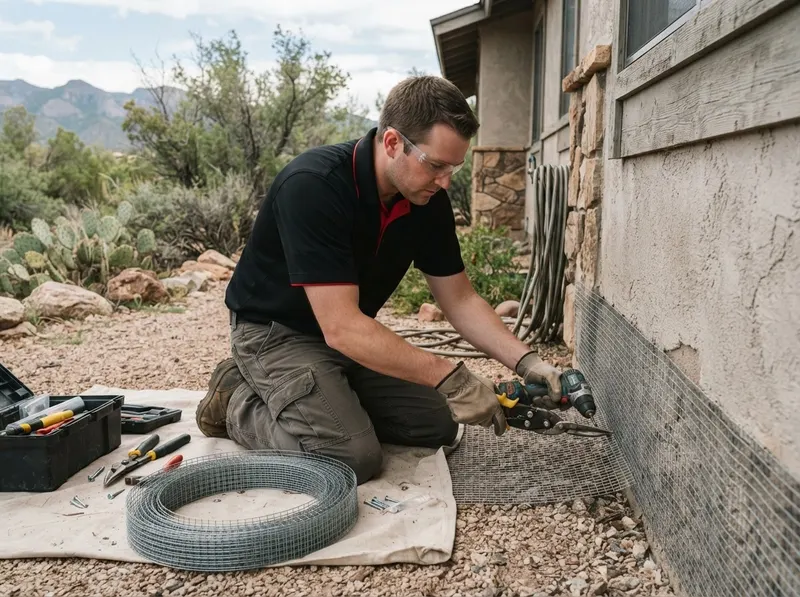
Physical remediation, nest removal, and installation of 16-gauge galvanized steel mesh over crawl spaces, attic vents, and subfloors to stop white-throated woodrats. Nests nestled in crawl spaces, HVAC outdoor units, and vehicle bays are physically dismantled and cleared to remove nesting fuels, prickly pear pads, and sharp debris. Technicians mechanically bolt heavy-duty 1/4-inch galvanized hardware cloth over crawl space vents, roof eaves, fascia transitions, and AC line-set penetrations. Snap traps placed along verified structural runways eliminate trapped specimens within 24 to 72 hours, avoiding outdoor anticoagulant poison baits that cause indoor animal decomposition odors and pose deadly secondary toxicity hazards to local red-tailed hawks, owls, and domestic pets.
Get a quote →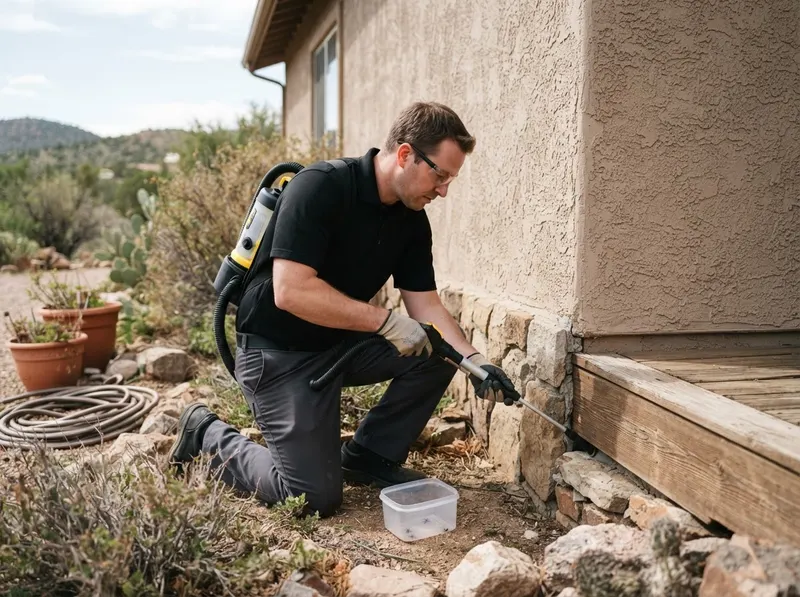
Targeted crack-and-crevice treatments, web de-webbing protocols, and exterior structural barrier bands to eliminate Western black widows and hobo spiders from living areas. Technicians utilize specialized mechanical brushes to clear webbing, egg sacs, and structural debris from eaves, sub-floor floor joists, meter enclosures, and exterior window frames. Specialized pyrethroid and microencapsulated formulations are injected into dark, recessed structural voids, cinder block cores, and landscape retaining walls where spiders establish ambush funnels. This dual-action protocol eliminates current arachnid populations on contact while leaving a microscopic crystalline residual across foundation ledges that neutralizes newly hatching spiderlings for up to 90 continuous days.
Get a quote →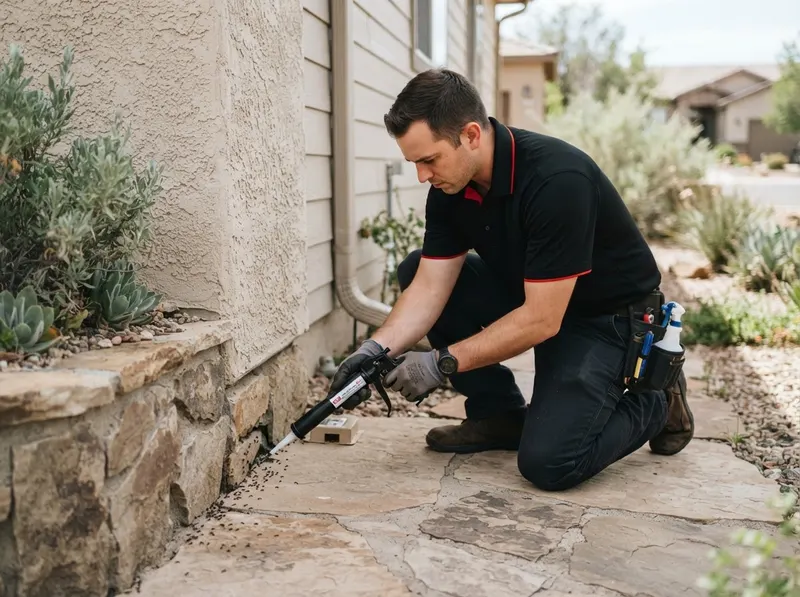
Precision protein and carbohydrate baiting systems coupled with perimeter non-repellent liquid transfers to eradicate invasive odorous house ants and harvester ants. Technicians identify internal and exterior foraging trails along baseboards, countertops, and patio flagstones to pinpoint satellite nesting galleries. Dual-matrix baits containing dynamic hydramethylnon or fipronil formulations are deployed inside locked, tamper-resistant monitoring units, permitting worker ants to transport active matrices deep into the subterranean queens' chambers. A broad non-repellent liquid perimeter wash applied along exterior foundation footings intercepts exterior foraging workers from adjacent native scrub oak zones, neutralizing the primary nest network without triggering defensive colony fission.
Get a quote →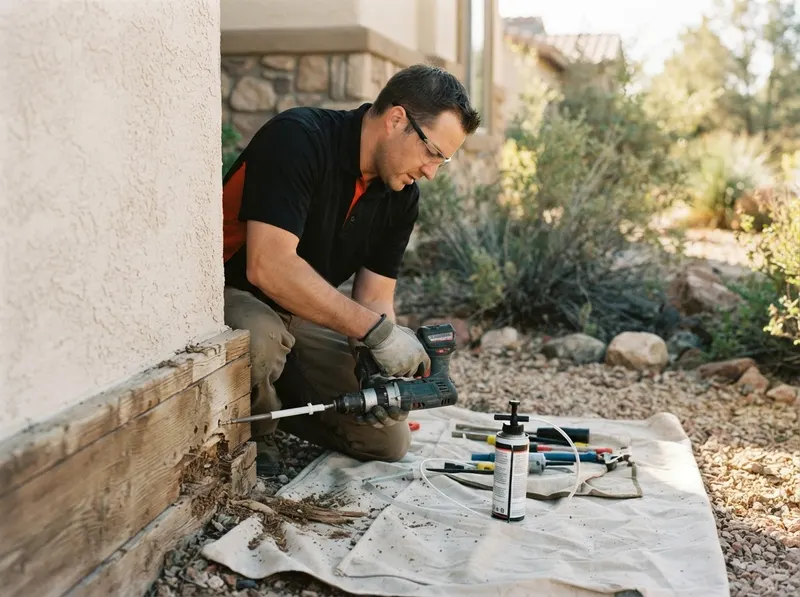
Targeted void injection and perimeter applications focused on pine and oak deadwood nesting zones that threaten exposed beam construction and exterior wood framing. Unlike termites, carpenter ants excavate galleries strictly for nesting, expelling sawdust-like frass from infested structural lumber, window headers, and fascia boards. Technicians utilize structural acoustic sensors and moisture meters to map moisture zones inside exterior walls, then drill pinpoint 1/8-inch access ports to inject low-pressure insecticidal dusts and non-repellent foams directly into hollow galleries. Exterior treatment isolates satellite colonies in surrounding yard deadfall and rotting pine stumps, halting re-entry into primary roof trusses.
Get a quote →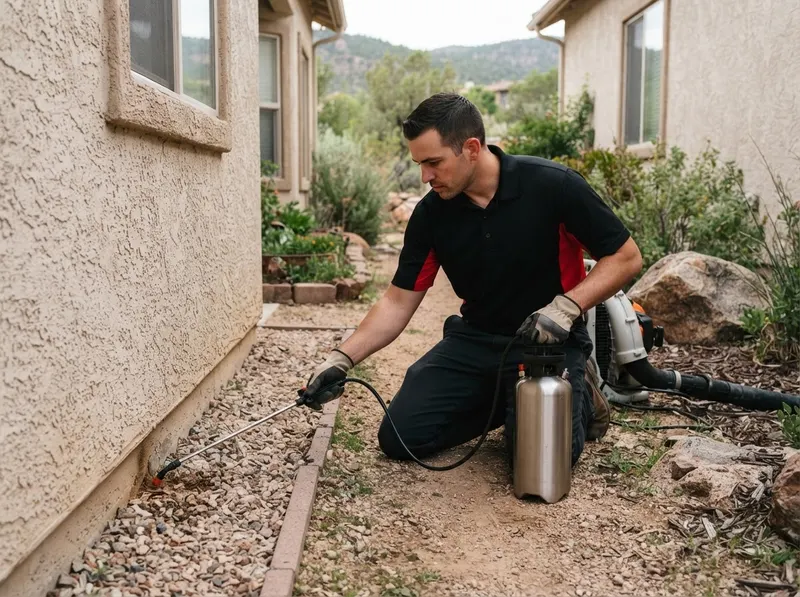
Sub-surface landscape soil soaking and foundation perimeter barrier applications to halt desert giant centipedes and seasonal crawling arthropods before indoor entry. Arizona giant desert centipedes and common millipedes thrive beneath flagstone paths, ornamental river rocks, and organic mulches, seeking ground-level cracks in residential foundations during seasonal humidity changes. Technicians deliver deep hydraulic soil drenches through rock landscapes and inject water-resistant microencapsulated barriers across all slab-to-grade transitions. Clearing dense ground covers back 18 inches from the perimeter eliminates moisture retention traps, systematically eradicating arthropod harborages directly adjacent to entry thresholds.
Get a quote →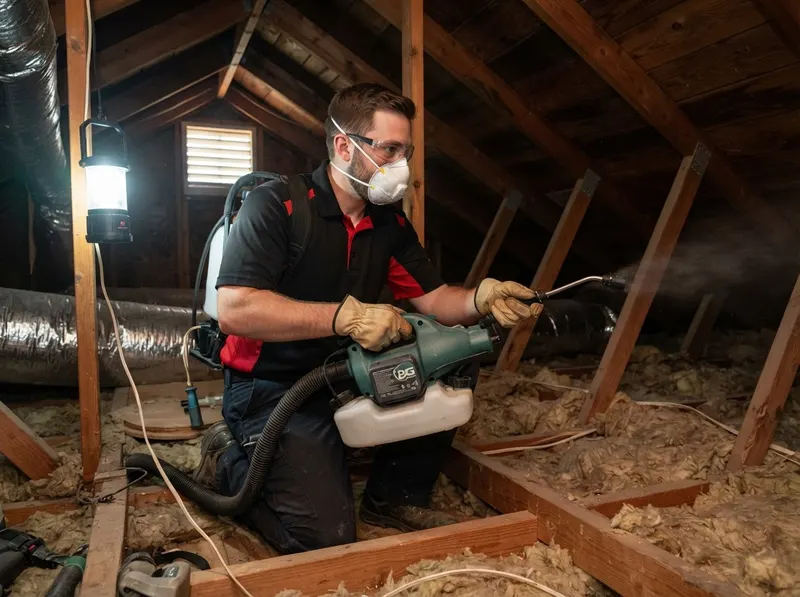
Biohazard clearing, targeted rodent pheromone breakdown, and metabolic waste cleaning following extensive mammalian or avian structural infestations. Technicians don respiratory protection to extract contaminated insulation, pack rat midden detritus, and localized droppings using high-vacuum negative air containment equipment. Contaminated structural timbers, joists, and subfloor decks undergo complete misting with hospital-grade broad-spectrum biocides, neutralizing hantavirus particles, salmonella bacteria, and musty rodent pheromones that attract future invaders. Exposed framing is sealed with specialized odor-encapsulating primers before new formaldehyde-free loose-fill insulation is reinstalled to proper thermal resistance standards.
Get a quote →You get a firm, itemized quote for your pest control sevice before any work begins, no surprises, no pressure.
Careful prep, tidy work, and a full cleanup when we are done. We treat your home and belongings like our own.
The same trusted, background-checked team from the first call to the final check.
Selecting appropriate intervention requires matching the treatment methodology to structural construction type, elevation, and immediate pest pressure. If a property exhibits active subterranean termite tubes along crawl space stem walls or concrete foundations, select a targeted liquid termiticide trenching and injection application. If the immediate threat involves bark scorpions or venomous spiders penetrating baseboards and window wells, choose an exterior microencapsulated perimeter barrier combined with mechanical entry-point sealing.
If wild rodents have breached attic spaces, choose structural exclusion and mechanical trapping over chemical baits. The operational trade-off centers on application permanence versus speed: liquid termiticide soil treatments provide up to 5 to 10 years of structural residual protection but require mechanical soil trenching, whereas topical perimeter microencapsulated bands create instant knockdown barriers against foraging scorpions but require seasonal maintenance every 60 to 90 days due to granitic soil erosion and monsoon washouts. Choosing mechanical rodent exclusion requires higher upfront physical labor to flash wire weep screeds and roofline penetrations, but it permanently eliminates attic recolonization without depositing secondary poisoning risks across local raptor food chains.
For expansive hillside parcels where native juniper and scrub oak physically contact exterior fascias, physical tree clearance coupled with horizontal foundation gravel bands offers a permanent cultural control trade-off, lowering reliance on broad-spectrum liquid chemistry while requiring routine landscape upkeep. Choosing bait matrix systems over non-repellent soil barriers for wood-destroying organisms trades instant elimination speed for passive colony suppression over an extended 3 to 6-month monitoring window, which is optimal for post-tension slabs where slab trenching presents physical structural risks.
Every project gets a firm, written price after a free on-site visit. Ranges below for orientation.
Tell us about your pest control sevice job and we'll send a clear, written quote, usually the same day. Or just call and talk to a real Prescott pro.
(520) 652-3819
Prescott sits at an elevation of 5,347 feet, where decomposing granite soils and native chaparral create specific environmental challenges distinct from lower desert regions. In communities surrounding Thumb Butte, the Granite Dells, and Granite Mountain Wilderness, properties border wild transition zones where bark scorpions and pack rats seek structural warmth during sudden winter freezes. During the summer monsoon from July to September, heavy surface runoff along drainage basins near Watson Lake and Lynx Lake Recreation Area saturates topsoils, driving subterranean termites upward toward stem walls and flushing ground-dwelling centipedes into perimeter foundations. Throughout historical neighborhoods surrounding Courthouse Plaza, Whiskey Row, and the Sharlot Hall Museum, aging fieldstone foundations and untreated structural timber framing create sheltered, humid crawl spaces vulnerable to subterranean termite tunneling. As rapid residential growth expands out toward Pinon Oaks, Cliff Rose, and American Ranch, earth excavation disturbs long-established underground rodent warrens and woodrat middens, forcing wild pack rats directly into new residential crawl spaces, subfloors, and vehicle engine bays. Furthermore, high UV exposure on south-facing mountain slopes rapidly oxidizes standard liquid insecticides within two weeks, requiring the specialized use of microencapsulated polymer carriers and heavy galvanized mechanical barriers capable of withstanding severe temperature fluctuations between freezing winter nights and 95-degree summer days.
Free estimates for Prescott & the surrounding area.
 Ravelo Pest Elimination